
Research & insights · 4 November 2026
Some of the most useful advances in science come from improving how experiments can be done. Solid-phase peptide synthesis is one such breakthrough: a method that helped researchers make defined amino-acid chains more efficiently.
A difficult task, rethought
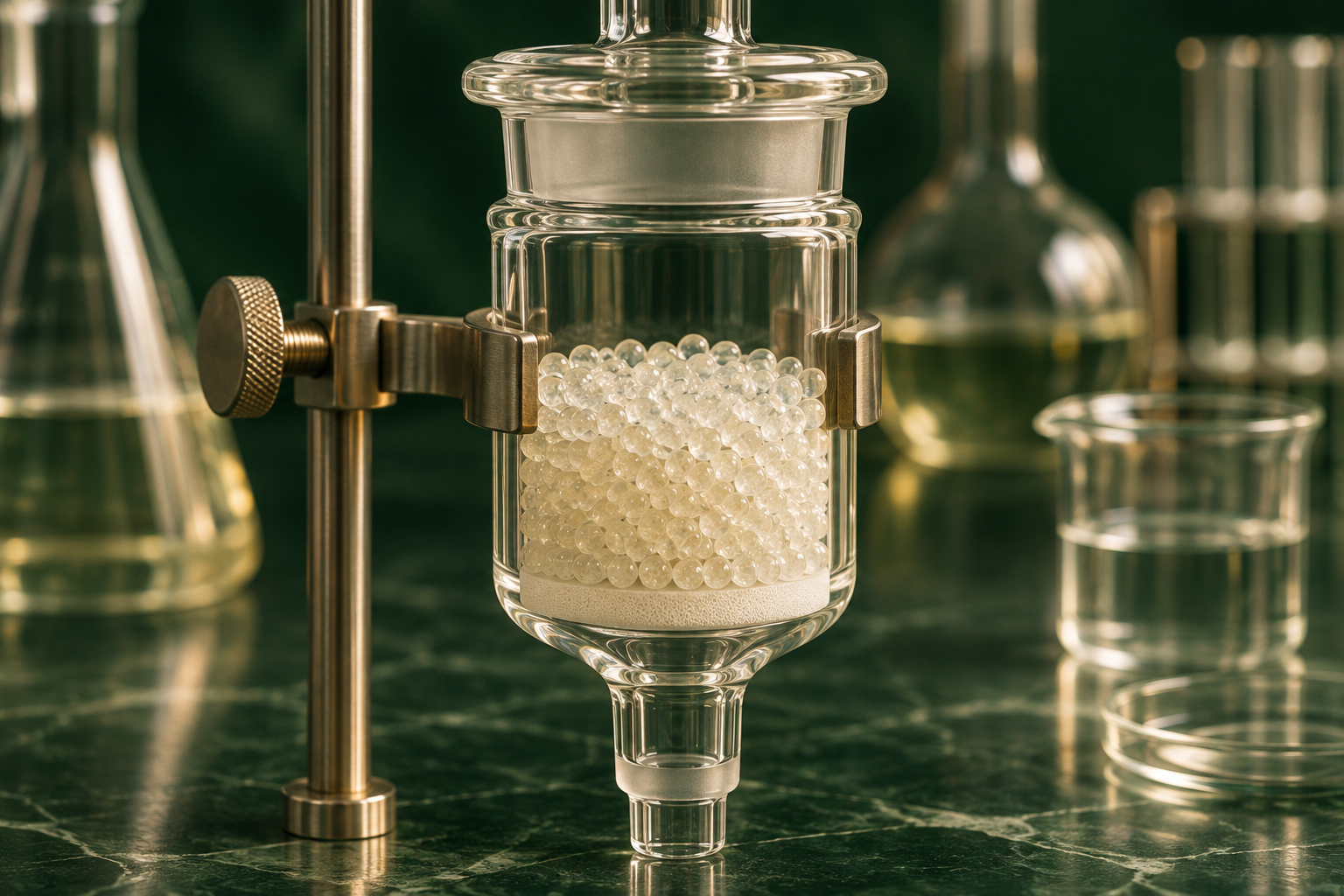
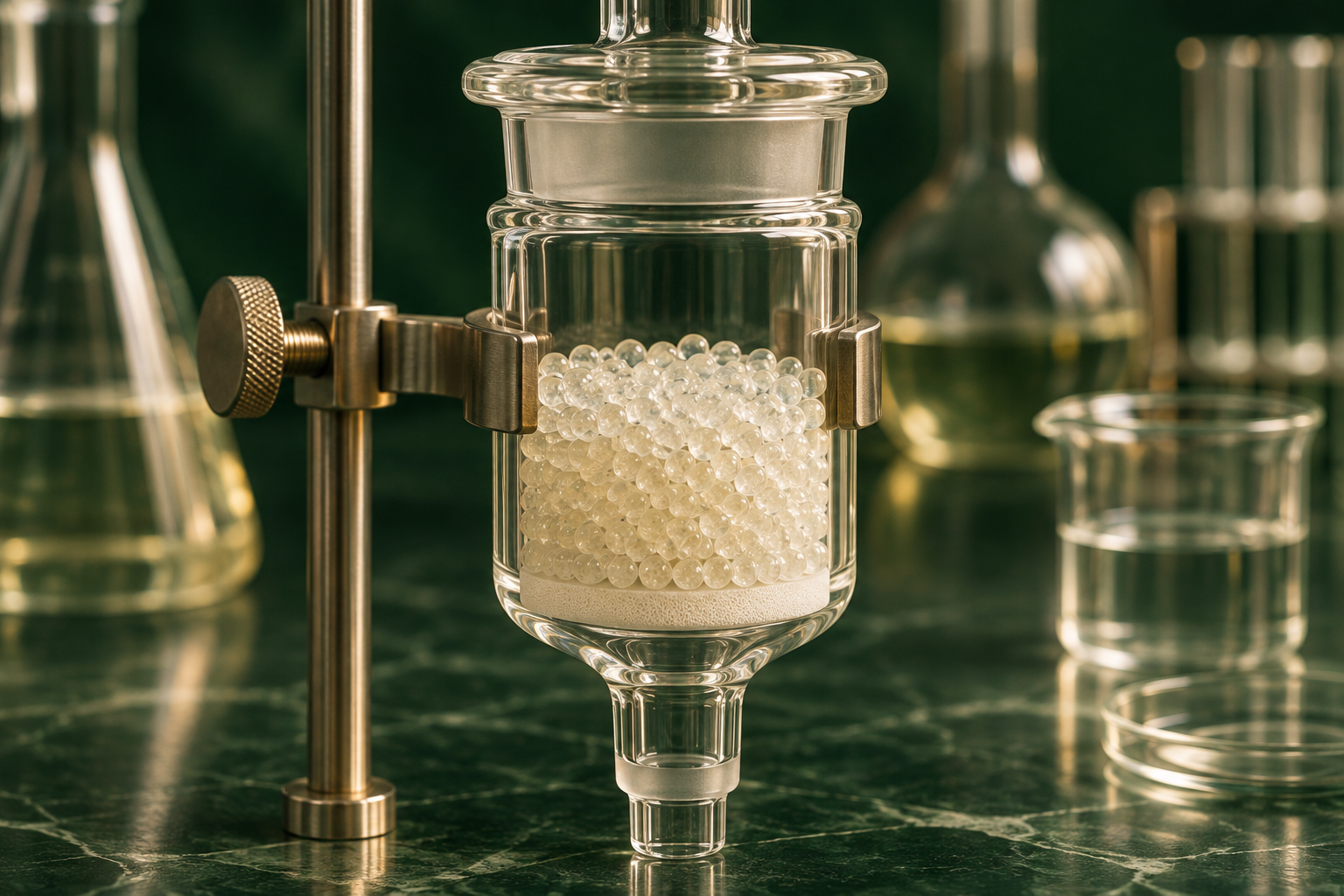
Before this approach, building peptide chains involved laborious separation steps between amino-acid additions. Bruce Merrifield’s solution was to attach the growing chain to a solid polymer support. This allowed unbound reagents and by-products to be washed away while the chain remained attached.
Once assembly was complete, the peptide could be released from the support. The Nobel Foundation’s account describes how this principle made sequential chain construction more manageable and helped enable automation.
Why the advance mattered
Merrifield received the 1984 Nobel Prize in Chemistry for his work on synthesis using a solid matrix. Rockefeller University describes the method’s development and its influence on biochemistry and molecular biology.
The scientific opportunity is straightforward: when defined sequences are easier to prepare, researchers have more scope to investigate them. Better access to research materials can support carefully designed comparisons and new experimental questions.
Synthesis is a beginning, not a conclusion
The ability to manufacture a sequence does not, by itself, establish what it will do in a biological system. A research programme still needs appropriate material characterisation, controls and a clear account of the experiment’s limits.
The enduring achievement of solid-phase synthesis is therefore a research capability. It helped expand the practical toolkit available to scientists. That historical contribution is valuable without implying that every peptide, or every marketed research product, has a demonstrated benefit for people.
Research context: This article discusses scientific history and laboratory research. It offers no dosing, administration or consumption guidance and does not endorse human or veterinary use.